

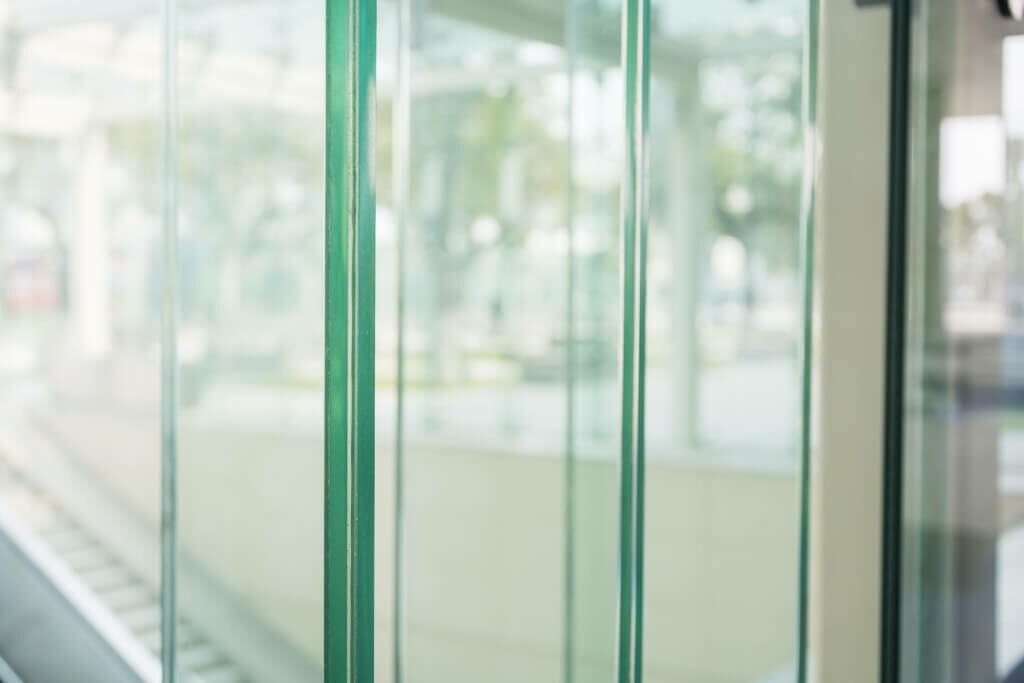
Attribution: Image. by evening_tao
Toughened glass is renowned for its superior strength and durability. For this reason alone, it has become an increasingly popular choice for applications in both commercial and residential buildings. But, despite its popularity, many people do not know how this type of safety glass gets its strength. Read on to discover everything you need to know about how toughened glass is made.
What is Toughened Glass?
Before we dive into the toughening process, it is important to establish what toughened glass actually is. In simple terms, toughened glass, also known as tempered glass, is ordinary float glass that has been designed to be impact-resistant. The stress patterns within the glass mean that if it does break, it will only shatter into small, blunt pieces as opposed to dangerous shards. Not to mention, this type of safety glass is up to five times stronger than regular glass panes.
While laminated glass and toughened glass are both types of safety glass, it is important to not confuse the two. For example, they are constructed in completely different ways, which means that they have distinctive properties. To learn more about these differences, read our guide on toughened vs laminated glass.
How is Glass Toughened?
There are two common methods of toughening glass:
1. Thermal Toughening
Generally, most toughened glass is made using thermal toughening. In this process, ordinary glass is heated up in a furnace to an extremely high temperature. The recommended temperature is around 620°C. Once the glass reaches an ideal temperature it is rapidly cooled by a blast of cold air. The glass is usually cooled over a period of 3 – 10 seconds. These jets of cold air cause the outside of the glass to compress whilst the inside is left to float for some time.
This tension leads to the development of residual compressive surface stresses on the outside and compensating tensile stresses in the interior area. As a general rule of thumb, the lower the thermal conductivity of the glass and the higher its thermal expansion, the more residual stresses develop. As a result, the stronger the glass will be. In most cases, the tension zone takes up about 60% of the core of the glass.
Unlike ordinary glass, when tempered glass breaks, the shattered pieces are not as sharp or hazardous. After all, there is a high amount of energy stored in residual stresses. So, it is no surprise that tempered glass is becoming more and more popular with people looking to increase safety in their homes, offices and even retail shops.
2. Chemical Ion Exchange
The second toughening method involves chemical reactions. In this process, ordinary float glass is dipped in a bath of potassium salt at around 300°C. As the salt dissolves, it starts to separate into potassium ions. The potassium ions are much larger and begin to replace the sodium ions on the surface of the glass. As the outer surface is compressed, tension is created inside the glass. This means that the force now required to break the glass pane is greater than the compressive force.
Types of Tempered Glass
There are many different types of toughened glass for you to choose from, including:
- Clear toughened glass
- Frosted toughened glass
- Reflective laminated glass
- Tinted toughened glass
- Toughened laminated glass
It is worth noting that the tempering process itself does not change the colour, clarity or hardness of the glass. To change these properties, additional processes are required.
The Benefits
If you are looking to implement glass into the design of your home or office, toughened glass could be the right option for you. Here are the advantages of tempered glass.
- Versatile – It can be used in a number of different ways to modernise your property
- Impact-resistant – Compared to ordinary glass, it is more resistant to impact
- Durable – Tempered glass is structurally stronger than ordinary glass and is less likely to break
- Safety – If it is broken, it will break into small, even shards as opposed to jagged pieces
- Strength – It is around four or five times stronger than normal glass and requires greater force to break
- Heat resistant – It can withstand extremely high temperatures, meaning that it is unlikely to break in the event of a fire
- Noise reduction – Its soundproofing ability means that it is ideal in busy areas
- Affordable – Toughened glass provides a cost-effective solution as it is less likely to break
To learn more about this amazing material, read our article on the advantages of glass.
Popular Uses
Whether you are looking to modernise your home or make your office space more practical, toughened glass has a number of uses, including:
- Creating stunning glass balustrades
- Upgrading bathrooms with beautiful shower screens
- Dividing spaces into areas with designated uses with bespoke glass dividing walls
Implement Toughened Glass Into Your Space
If you are looking to learn more about how toughened glass is made, get in touch with our Northern team on 01925 755145. Alternatively, you can speak to our Midlands specialists on 0121 663 1240. If you already know that toughened glass is the right choice for you, fill out our online enquiry form to receive a quote.
FAQ
Is toughened glass unbreakable?
While it is possible to break toughened glass, it is four or five times stronger than normal glass. This means that it requires a lot of force to break.
How is toughened laminated glass made?
Toughened laminated glass is made by putting a specialist interlayer in between two paces of glass, then heating, pressing and bonding them together.
How can you tell if the glass has been toughened?
Generally, toughened glass has a smooth and sleek appearance. Normal glass, on the other hand, has rough edges. You can also look for a BSI Kitemark symbol in the corner of the glass. The code for toughened glass is BS EN 12150.